Seasonal Closet Swap Checklist for Small Apartments
October 13, 2026 - Organization


October 13, 2026 - Organization

October 12, 2026 - Packing

October 09, 2026 - Decluttering

October 08, 2026 - Home Spaces
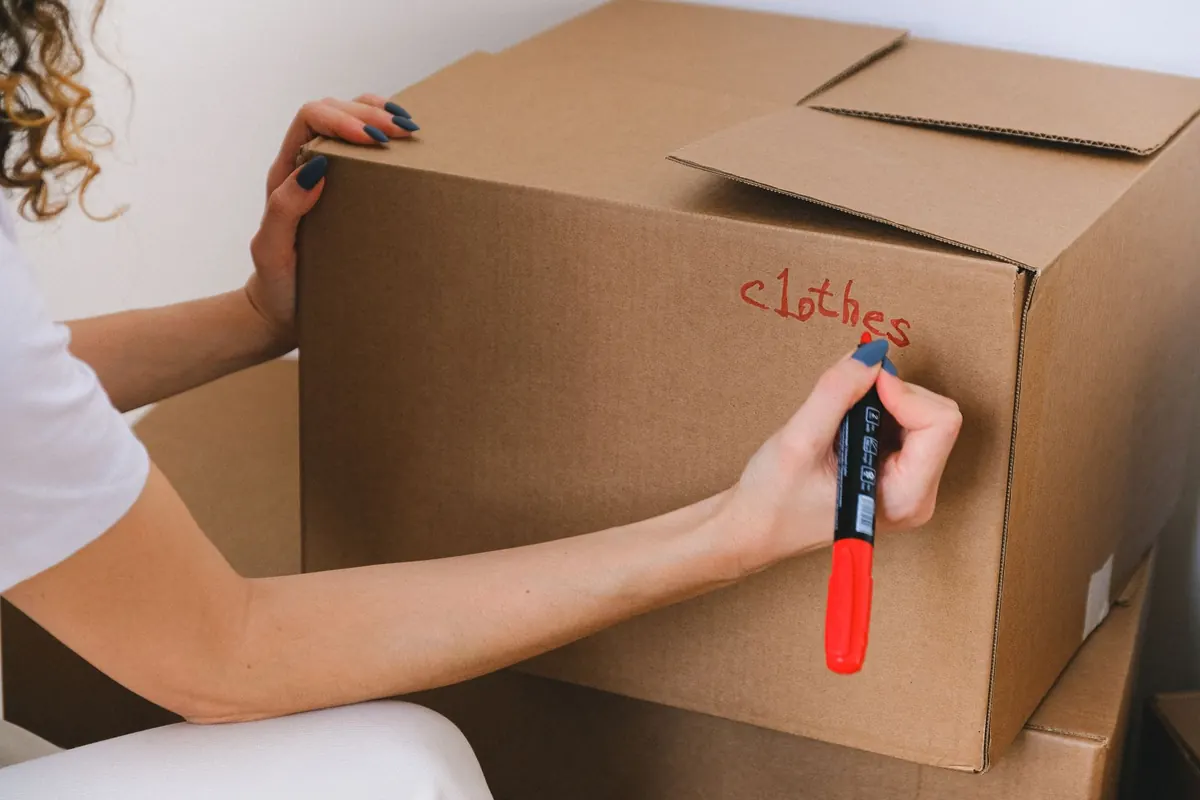
A sock with no partner. A charger for a phone you replaced years ago. The good scissors you can never find because they're buried under three other pairs. Most homes don't have a storage problem — they have a backlog of decisions nobody has made yet. The five-box method fixes that by giving every object a destination before you pick it up. Keep, donate, sell, trash, relocate: five labels, five containers, and one rule that keeps you moving. Nothing leaves your hand until it lands in one of them.
The hardest part of decluttering isn't the hauling. It's the pause. You pick up a candle you never burned, you don't love it, you don't hate it, you paid for it once, and someone somewhere might want it. So it goes on the maybe pile — and the maybe pile is where decluttering projects go to die. Every time you walk past it, you have to make the same decision all over again.
Five boxes remove the pause. Each item gets a destination in seconds, and the destination is printed on the container in front of you. You aren't deciding whether to keep something forever. You're deciding where it goes today. That's a much smaller question, and it's one you can answer a few hundred times in an afternoon without wearing yourself out.
Prep takes five minutes and saves an hour of second-guessing.
Only things that pass two tests: you used it in the past year, and you'd replace it if it disappeared tomorrow. Sentiment counts as a use. A single mug from a trip to Lisbon earns its shelf space; the free one from a conference doesn't.
Things in good working order that someone else will genuinely use: clean clothing, working small appliances, books, craft supplies, kitchen duplicates. Animal shelters often take old towels and blankets.
Only items worth more than the time and hassle of selling them. Furniture in good condition, brand-name tools, bikes, gaming consoles, unused electronics the manufacturer still supports.
If you're selling or donating anything with real value — antiques, collectibles, inherited items — it's worth checking with a qualified appraiser or tax professional first, since the rules vary by country.
Anything broken, expired, worn out, stained, missing parts, or unsafe. Expired food, dead pens, dried-out glue, single socks, cracked plastic containers, manuals for appliances you no longer own.
Items that belong in your home but not in this room. The tape measure that lives in the toolbox. Books that belong in the office. Your partner's headphones.
The method only works if the boxes leave the room. Keep items go straight back to their shelf, in their new home. The donate box goes into the car trunk and gets dropped off within the week — put the errand on your calendar now. Sell items get photographed and listed that evening, with the three-week deadline written down. Trash goes to the bin, recyclables to the bin, and hazards to the drop-off. Relocate items get placed, not parked.
If you truly cannot decide on something, don't build a maybe pile. Send it to donate and don't revisit it. You were doing fine without it before you found it again, and you'll keep doing fine after it's gone.
Photo: SHVETS production / Pexels
A step-by-step seasonal closet swap for small apartments: timing the switch, sorting and packing off-season clothes,...
An eight-week moving-day packing timeline that breaks sorting, boxing, labeling, and last-minute essentials into...
October 13, 2026 - Organization
October 12, 2026 - Packing
October 09, 2026 - Decluttering
Copyright © 2026 The Stow Guide. All Right Reserved.